Tekub agi Otsü Ashir [Skin as Script]
Poetry
.
2:14
Title: Tekub agi Otsü Ashir [Skin as Script]
Language: Ao
Narrator: Moamenla Longkumer, PhD Scholar
State: Nagaland
Tekub agi Otsü Ashir
Tesadang ka India nung, tesadang ka Myanmar nung ta aliba
Longwa yim nung tsüsü agi artsü akumer
Yangi, tekub nung ayak atepba jaki, O jembiba den tashiba ola adoker.
Tekub nung V, X, Z mesuk aser metong-metonga atepba ayak jaki
Arju ki nung aonung ka mi tesangwa nung
Tanur agi tebur akumba indang otsü-a ashir.
Ayak atepba tetetzü mangko agiba kisung masü
Saka tongpang rarai aoba mesura keyi tanüla ain aketba indang ashir
Tanu asung sui-supongeri item ayak indang tetetzütem ratettsü makok
Honngo Wangshu mang nung item ayak aki otsü ashir
Pa jak ji lipok otsü kaket ka ama
Pa ola ji Osang Tajung aser Tongpang Meyuh ka ama
Ano sa pa ayak agi leptep-tsüngtepba otsü-a bilemtetdaktsür.
Mangko ayuba ki-i onok jaja ao- tazüng meyak agi ola aika adokba ki ka
Ku len anisang asanguba dak tetsübo jakden ajitet
Iba ki nung tasür-i akumlir den jembia liasü.
Tanü Longwa nung Tsungrem O aser mangko na kulemi alır
Ayak nung smartphone camera agi tesangwa yaloktsür
Yangi yashi aser tanü kulemi jajar,
Tsükchir ama masü, saka nok ka anatsülen ayia chiradaktsüba ama
Iba nok ya mamshiaka tanü tashi lipok otsü nung chira lir
Aser tekub nung ayak atepba ajanga alemli otsü wazüka yua lir.
— MOAMENLA LONGKUMER (Author)
— TALIMEREN TZUDIR (Translator)
Summary of the poem
The poem portrays Longwa village on the India–Myanmar border, where tattoos serve as living
records of courage, manhood, and ancestral memory. Each mark tells a story that outsiders
cannot read. Honngo Wangshu’s tattooed face embodies this history, linking past and present. In
Longwa, tradition and modern life coexist — the tattoos ensuring that the community’s stories
and identity are never forgotten.
Skin as Script
One foot in India, one in Myanmar,
Longwa stands where mist draws its own border.
Here, skin speaks before words —
inked in Vs, Xs, Zs, and lines.
Each mark remembers a fire,
a night in the Morung,
the slow arrival of manhood.
Not all lines mean a head was taken;
some mean you faced battle,
or carried a spirit-tiger on your shoulder.
Tourists cannot read this alphabet.
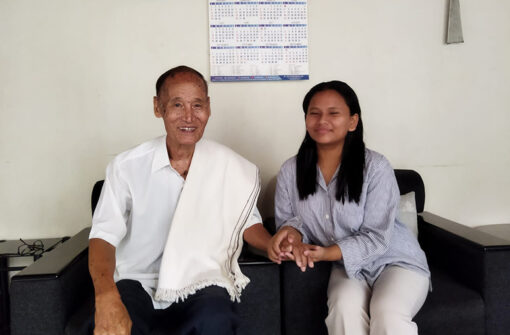
Honngo Wangshu wears it still —
his face a map of history,
his voice both gospel and drumbeat.
Between the lines, violence turns to memory.
We walk to the skull-house,
a shrine heavy with silence.
My guide lingers, half afraid
the dead still bargain with the living.
Longwa breathes between sermon and skull,
tattoo and smartphone flash.
Past and present walk together here —
not as rivals,
but as two sides of one blade,
sheathed now,
still sharp in memory.
We mark the skin so the story does not wash away.
—MOAMENLA LONGKUMER