Lwanjang – Kabuikhullen
Poetry
.
1:36
Title: Lwanjang – Kabuikhullen
Language: Inpui (Kabui)
Narrator: Sachoiba Inkah
State: Manipur
Ei apu kehiak zong lang inmwan bi hungda
Ei kriangtakcha, namtaaklu rimrim ung ngaak e.
Ei lunglui kathai lang inmwan bi hungda
“Hungna rubo?” kut balaan swakka
Ating kadou thang ding danne.
Bazi in inkhu bi khut han ga
‘Chacham za le inlo’, leiswak ding danne.
Phaang ngo, heiya aom inmwan rwe.
Phaang ngo, achaat meiri
Heiba talei bi ri thang da rwe.
Ramwan liannu chung bi Inpui nampui,
Mi raching-raching lung swaknu namlian,
Lungpek chung bi hiak thangnu tahiak
Khatle anu Inpui kadai riak hung mu luga
Naosen dan ga chap e.
Innai ankwat karak le sut swak rwe,
In bing le raam loi ta rwe.
Indon reipaan le kamang rei gon da rwe.
Nu kehiak le louna taphaapna mu lan rwe.
Bazaamnu ramwan chungbi
Karing Ngei katang rangaak laa tonu
Inlu-inte kabaang ung me.
Khwazin nao kounu braamle
Ngaisu ga kriang inku we.
Kriang nge sentak batim sanu nam
Kamaang gon dam ding rwe.
This poem was written in memory of Kabuikhullen (Lwanjang) village which was relocated
as a result of a devastating earthquake on 4th January 2016.
Running Translation in English
When I came to the village, tracing the path of my grandfather,
my beloved – the place lay silent, deserted.
As I come in search of my heritage,
It felt as if someone, arms outstretched,
would greet me with, “So, you have arrived?”
Standing on the veranda of a thatched house,
I could almost hear a gentle voice offering,
“Drink this simmered water.”
Behold -this is my village.
Behold- the story of my people lies buried in this earth.
A great Inpui village, cradled by a vast mountain,
a village that has birthed a thousand generations.
Marks still etched on stone bear witness to our past.
Yet, when I saw the old Mother Inpui playground,
I wept like a child.
The fences of neighbours’ gardens have fallen apart,
every house has withered into decay.
The flowers once nurtured in courtyards
have become wild blossoms.
Mother’s footprints have vanished
beneath an overgrown weeds.
And still, in the wind, I hear it –
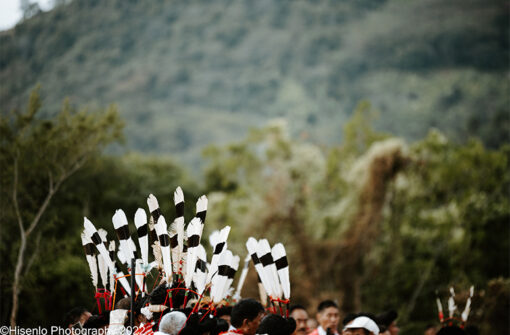
the voices of youth singing during Karingei,
carried from the flatland atop the mountain,
echoing from one end of the village to the other.
I love this village all the more,
as I hear children calling their siblings home at dusk.
Yet, it aches – this once-living village,
grazed by mithun,
is becoming one with the forest.
Glossary
Inpui- Name of the tribe
Lwanjang (Kabuikhullen)- Name of the village
Karing Ngei-Festival of the Inpui (Kabui) tribe
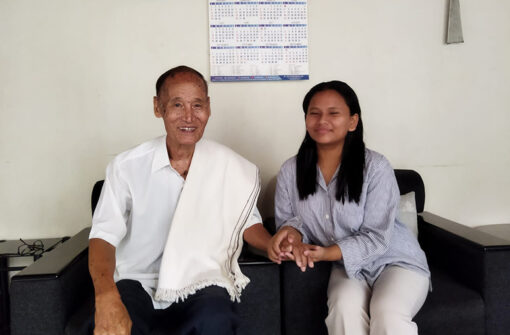
Sachoiba (Isaac) Inkah complted his studies from Jawaharlal Nehru University, New Delhi.
He has also undertaken specialized training in Human Rights and People’s Diplomacy at the
University of New South Wales, Sydney, Australia. An accomplished author, he has
published two books in the Inpui (Kabui) language: Thabaan Sanu Zingpha: In Search of an
Audience (2017) and Inpui Naga Karing Ngei 2018: Reproducing Oral Narratives in Inpui
(2019).