Tamang Katetba Rara [A Faithful Battle]
Poetry
.
1:34
Title: Tamang Katetba Rara [A Faithful Battle]
Language: Ao
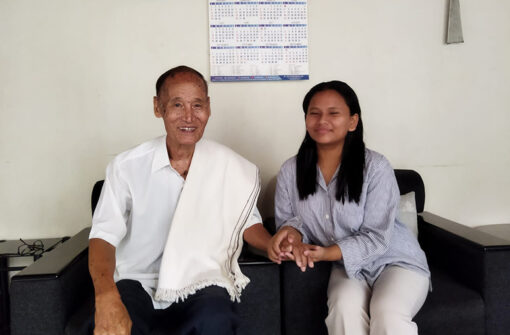
Narrator: Miss Arenkala Chungmir
State: Nagaland
Tamang Katetba Rara
Ni tanubosang aso, temeim aser anepalu agi lungbang.
Tenemtem agi azübanger kü tajebba mopung nung aongmetang ao.
Mapang süi, khuret ain, nüngti mapang oadok,
Ayameso ni Assam-i kibong mesütsü asoshi.
Tzüyim atena len talang nungi nisung tasen aru,
Kati ka memetet saka pei pei otsü lemsatep,
Ni memetetba nisung kati yokba tenyartem parnok mesük,
Saka parnoki iba nisungbaji shibar kü nem metetdaktsü.
Parnoki Tsüngrem ta ajaba nisung indang ni angazüktsü tenzük.
Aser Sibsagar tzü indang taochi ajanga kü nela tasen aküm,
Kiyimtsü mapang atong, kü mulungjang temerük liasü.
Kü tasoli nungi kinungtsü ka agitsü ni yongya.
Ozü yimdaki ni meyipa aru, mepetmesü ni angu,
Teka mekanga iba asoshi ni ola adoka sarasadem
“Rara aser azü tokshi Tsüngremi mulungba masü” ta ni ajeb.
Kü süoshi balaka ama parnoki reprang aser tangu agi tenüng ka ashi.
Nü kati kü dak atsüng, tsükchir arur kü milak remseptsü.
Tokolak, teben aser tetsüng lepzük aser khonang ama bener ao.
Kü taküm tembangaka, küm metsü sülen par chirtem aru,
Aser tenem ayimsünga pa o agi süngdaktsü.
A faithful battle
I was born the youngest, surrounded by love and care.
Cradled by mountains where my crying echoed through the air.
Time passed, burdens grew, my teenage now gone,
Away I went to Assam to feed my home.
New people sailed through waters from afar,
Unknown to each other, yet shared stories of our own,
They were like angels send through someone I never knew,
But they helped me know who that someone was.
I started to learn about someone whom they called God,
And through the Sibsagar water’s grace, my soul was new.
The time had come to wed, my heart was clear,
I longed to marry a girl from my birth place.
I returned to my village, saw chaos around,
To that I prayed aloud, my hands held high.
“Fighting and bloodshed,this must not be God’s will,” I cried.
My clothes seemed strange to them, and whispered a name.
A spear struck me, enemies came and ended my flame.
Head, arms, and legs were cut and taken away like rewards.
Though my life ended, yet after two decades came His children,
And filled the hills with His words all around.
Summary
This poem is written from the perspective of Longjanglepzuk, who was the first Ao Naga to convert into Christianity. He was from the Merangkong village and was born in 1830. He was the youngest among his siblings and was loved by all. At the age of twenty he went to Assam to work and learn for his family. There he met the missionaries(American Baptist). The missionaries wanted to spread the gospel even in the Naga Hills ans were happy to have met him. They shared stories with each other and he learned about God and was baptized and became the member of the Sibsagar church. After his baptism he worked for God’s glory and worked hand in hand with the missionaries. After some years the missionaries wanted send him to his native village as a missionary to spread the gospel and even asked him to marry. His heart was clear he wanted to marry someone from his native village. Soon after that he returned to his village in search of a girl. Unfortunately he came to Merangkong at such time where there was chaos everywhere. The village was raided by some other villages. Seeing all this he payed and pleaded for the Chao to end saying that it is not the will of God. As he was standing there wearing his white Dhoti since he came from Assam, the enemies saw him strange because of his clothing and thought he was the Merangkong God. The enemies pierced spear from his back and cut away his head, legs, and arms.
As his life was taken away, it was a great loss for the mission to the Naga Hills and that went on for a long time and finally in 1872 God gave to the Naga Hills another privilege of hearing the gospel. As Longjanglepzuk life ended early, there is not much involvement in mission but there is blessing among the Merangkong and the Ao people.
Glossary of indigenous terms and symbols
Aongmetang- Echo
Khuret – Burdens
Otsü – Story
Tenyartem- Angel
Tsüngrem – God
Tasoli – Birthplace
Mepetmesü – Chaos
Sarasadem- Prayer
Nü – Spear
Milak – Fire/ Flame
Tenyartem
Symbolizes the children of God or the missionaries that came from afar to preach the gospel of God
Mepetmesü
Symbolizes the raids and wars among the villages.
Tasoli
Symbolizes a peaceful, natural place filled with memories, innocence and love.
Nü
Symbolizes sacrifice. It was the spear from the enemy of the other villagers that ended the speaker’s life.
Milak
Symbolizes life,faith and hope of the speaker as well as the missionaries.