Awe Netho [My Village]
Poetry
.
0:52
Title: Awe Netho [My Village]
Language: Chakhesang(khezha)
Narrator: Tshetelolu Wezah
State: Manipur
Biography
Tshetelolu Wezah belongs to Chakhesang community of Manipur. She is currently pursuing her MA in English Literature. She has a deep love for reading novels and writing poetry, often finding inspiration in her native culture, nature, and the people around her. Passionate about learning and self-expression, she welcomes every challenge and opportunity that helps her grow as a writer and individual. Through her poems, she seeks to preserve and celebrate indigenous identity while exploring the emotions and experiences that shape human life. She continues to learn, observe, and delve into the world of literature with curiosity and dedication.
Awe Netho
-Tshetelolu wezah
Kadzubu kadelu
Awe netho Jessami geni be
Eleikeshizo phutozi
Mapu tekhe mukulo Netho
Ene minezitsulonhe “Tekru- Nge” lu
Nohi mozo yizo tshuni omoi
Edipfuzubawe edze eniloni
Netholu lemuzi Khevo utsu.
Awe Netho
Utshubo mutanizo phutozi
Uru taru, Udzu taru, Mutani ulozi tsu
Eniloketsu tshu tsuloni Eli mukuzi khevo utsu
Leishikedzu awe Netho
Lathaba bemesa musukedzuyo
Awe Netho, Awe eke
Ruke wekelewu tsulole.
Translation in Chakhesang khezha of Jessami village.
My Village
Written by- Tshetelolu weza
In the wide, wide world,
there lies a village named Jessami,
filled with love,
a home of blessings, a peaceful land.
When the festival of Tekru- nge comes,
the folk song “ Nohi Mozo” fills the air,
and as elders tell the old stories,
warmth spreads through every home.
My village—
dressed in green pastures,
where the humming birds sing sweetly,
where the waterfalls whisper softly,
and the plants dance to the wind’s tune,
bringing calm and peace to every heart.
My soul sings for my village.
Though miles may keep us apart,
its memories live within me,
every heartbeat carries its warmth.
My village, my home.
may your peace live forever.
Glossary
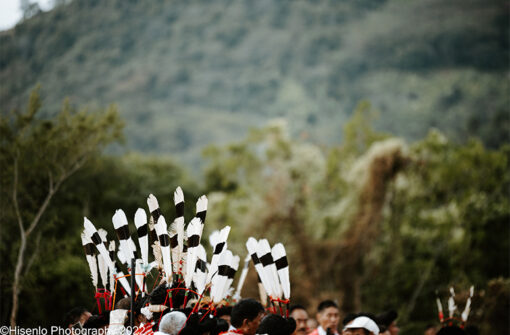
Tekru Nge– A traditional festival of Jessami; symbolizes the old culture and customs passed down by ancestors, celebrating heritage, community, and shared traditions.
Nohi mozo– A traditional folk song of Jessami, sung especially by women during the Tekru Nge festival and in competitions. The song has remained unchanged over time, preserving the village’s cultural heritage.
Edipfuzubawe edze– Traditional folk tales of Jessami, narrated by grandparents about their ancestors. These stories preserve the history, values, and culture of the village.
Jessami– A village located on the border of Manipur, known for its peaceful environment and lush green pastures.
Leishikedzu awe Netho– A phrase in Chakhesang Khezha meaning “love for my village,” where Netho specifically means “village,” expressing deep affection and attachment to one’s homeland.
Summary of “My Village” “ Awe Netho”
The poem My Village is a heartfelt tribute to Jessami, the poet’s hometown, located in a peaceful, green corner of the world. The poet celebrates the village as a place of love, blessings, and harmony, where traditions and nature coexist beautifully. During the Tekrung-e festival, the folk song Nohi Mozo fills the air, and elders narrate Edipfuzubawe Edze, the ancestral folk tales, spreading warmth and strengthening the sense of community.
The poet also emphasizes the natural beauty of the village—lush green pastures, singing hummingbirds, whispering waterfalls, and plants dancing in the wind—all creating a tranquil and soothing environment. Despite being physically far from the village, the poet carries its memories and warmth in the heart, expressing deep emotional attachment. The poem ends with a blessing for the village’s eternal peace, reflecting reverence and love for home. Overall, the poem is a lyrical celebration of nature, tradition, and the emotional bond with one’s homeland.